Mantises eat flies and aphids and the bigger dudes actually have a taste for meat, stalking lizards, frogs, birds, rodents, and snakes! Holy camoley.
Lacewings are a common garden visitor, as well, and someone you want to be friends with. While the adults stick to pollen and aphid honeydew, the larvae are voracious feeders, pigging out on aphids, caterpillars (yes!), beetles, scale insects, leafhoppers, thrips, small flies, mites, and sometimes one another. I guess they're temperamental.
Here's a
good website on lacewing activity with loads of pictures.
Adult Lacewing
Lacewing nymph
 (image courtesy: http://adlib.ac.uk/adlib/content.aspx?doc=10816&id=10835)
Another keeper is the ground beetle. It eats anything it can catch and kill, including grubs. Hang on to them. They only come out at night and they mind their business. Don't pick them up, though, because they emit a nasty smell.
Ground beetle
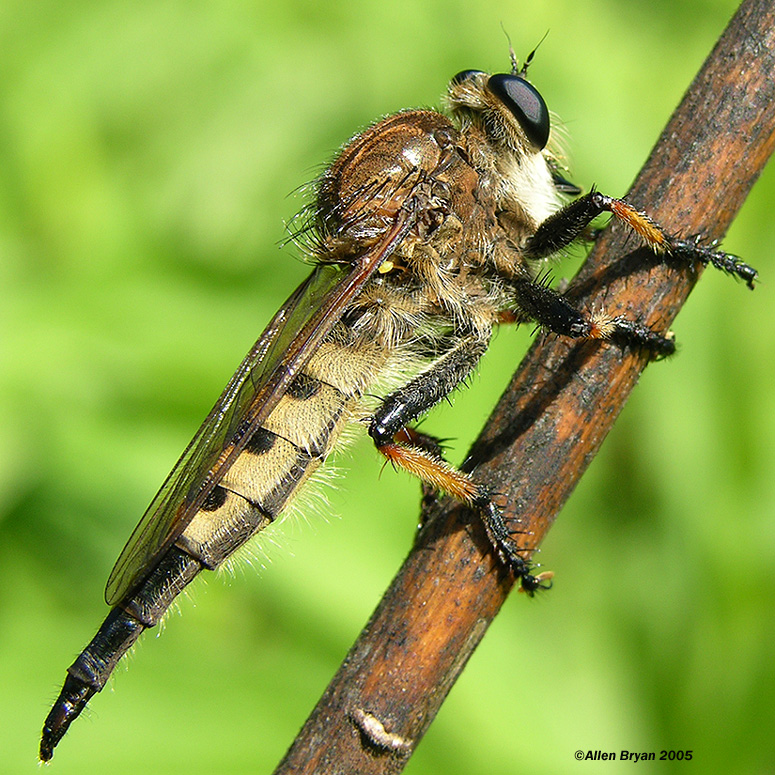
If you're lucky you might spot a robber fly. I saw a couple of these over the past few weeks in the back yard and I didn't know what they were until just now (as of this writing when I found them online!)...they look like mean-ass dragon flies but they eat all sorts of things we prefer not to be bothered with ourselves, such as wasps. Call in the robber flies and avoid the poison sprays! They also eat grasshoppers and other prey as big as themselves oftentimes. Now that's some insect muscle flex!
Call me deadly - Robber Fly
I will eat you!
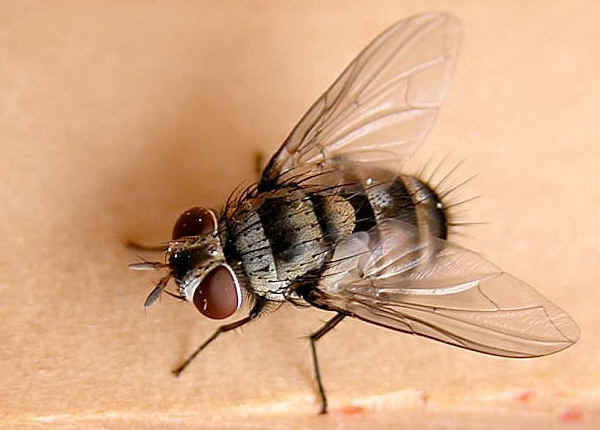
The tachinid fly does us a favor by laying its eggs on another species, typically caterpillars but also bugs and grasshoppers. The eggs eventually hatch and burrow into said species, basically using it as a food source. Like that giant alien did to humans in the Alien series (Sigourney, I love you!). Very medieval nasty stuff. But hey, in this case, we benefit. There are 1300 species of tachinid fly in North America - mostly they're gray, black, or striped, but they can be hard to distinguish from regular house flies.
Tachinid fly
House fly
If they're flying around, chances are you won't be able to tell which is which. Moral? Leave 'em be. The other predators and frogs should be able to sort out extras of either species, anyway.
Predatory wasps do much the same thing. You can tell a predatory wasp from a regular wasp because the predator is smaller. The ones I've seen are a slightly orangey color and have small greyish-bluish wings - they remind me of flying tripods, sort of like a cross between a wasp and a fly.I'm not sure if they sting humans, but they haven't ever bothered me (then again, I'm not the sort of person who freaks out when they see a wasp or bee). They eat aphids, whiteflies, and moths, such as cabbage loopers and hornworms. Think small attack drone, specially designed for dangerous reconnoitering missions.
Brachonid predatory wasp predatorizing
Eggs on a caterpillar becomes parasite and host
Here are a few more to keep around - be friendly-like...
Assassin Bug - flies, mosquitoes, beetles, caterpillars
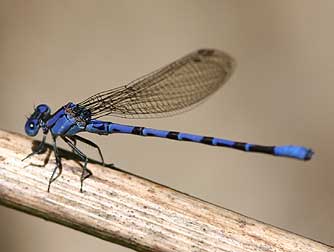
Damselfly and Dragonfly - beautiful and voracious, love mosquito tartare and aphids
Rove Beetle - aphids, springtails, mites, nematodes, slugs, snails, maggots, and compost makers
Yellow Jackets - caterpillars, flies, beetle grubs (and sting us human folk, too)
Firefly!!! - larvae, snails, slugs
So that just about does it...I'm sure there are many more and I thought about including earthworms, which are my personal favorite garden creature. But I think I'll dedicate a whole blog to the precious worm.
In the meantime,
please know your bugs. Get to know them. Watch them. See if you can catch them eating. I got to watch a lady bug take down an aphid bite by bite last week - it was amazing! Re-think the use of broad-spectrum pesticides...use diversity to invite good bugs to do your dirty work for you.
Two good websites for more information:
http://www.gardenguides.com/pests/tips/beneficial.asphttp://www.govlink.org/hazwaste/house/yard/problems/goodbugs.cfm









 Posts
Posts


